


So... What is Local SEO?
Local search engine optimisation, commonly referred to as local SEO, focuses on improving how a business appears in location-based search results. The goal is to increase visibility when people search for services or products within a specific geographic area.
In practical terms, local SEO helps businesses show up when potential customers actively search for nearby solutions. When someone types a query like “pizza restaurant near Manhattan,” they are looking for relevant local options rather than generic websites. The businesses that appear are not selected at random — they are chosen based on how well they align with Google’s local ranking factors.
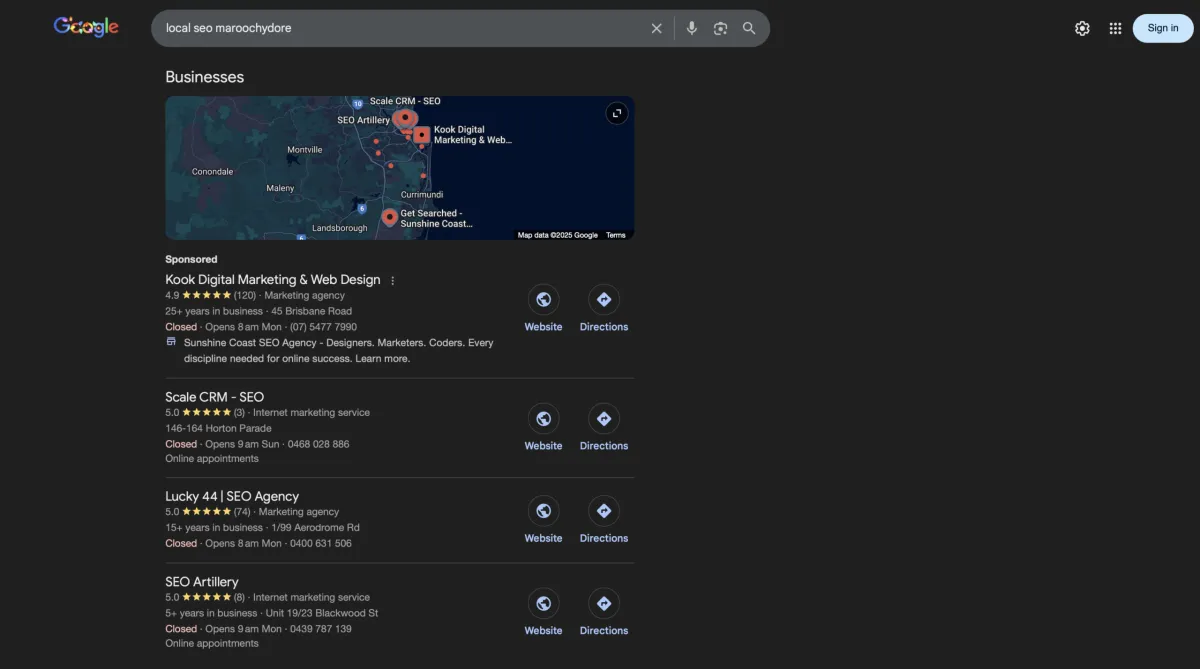
Google displays these results in what is known as the Local Pack, which is powered by a location-focused algorithm. This system evaluates business listings, websites, and local signals to decide which Google Business Profiles are most relevant to the searcher’s location and intent.
While many assume local SEO simply involves creating a Google Business Profile and adding location keywords to a website, the reality is far more involved. Effective local optimisation requires ongoing effort across multiple areas, all working together to improve local search performance. In the sections below, we’ll explore how local SEO actually works and what goes into building strong local visibility.
Why is local SEO Important to me?
Local SEO plays a key role in helping businesses connect with customers in their surrounding area. By improving visibility in location-based search results, businesses increase their chances of being discovered by people who are actively looking for nearby services or products.
Every month, search engines process an enormous volume of local queries.
When a business appears prominently for searches tied to a specific location, it has a far greater opportunity to attract attention, website visits, and enquiries from relevant users.
Search engines display local results when they determine that a search has geographic intent. This may occur when a user includes location terms in their query, uses phrases like “near me,” or is searching for services while physically located in a particular area.
For example, people may search using phrases such as:
“Plumber”
“Plumber near me”
“Plumber in Sunshine Coast”
Businesses that have invested in strong local SEO are more likely to appear for these types of searches, increasing the likelihood that users will find, visit, and engage with them.
No matter the industry or service area, most businesses can benefit from local search visibility by aligning their online presence with how customers search.

How does Google evaluate local searches?
Google’s algorithm determines which businesses to show in location-based results by combining standard search ranking factors with signals specific to local intent. Understanding how this system works can help businesses improve their visibility for nearby customers.
The local search algorithm primarily considers three core elements:
1. Relevance
Google evaluates how closely a business matches the search query. This includes factors such as the categories selected in your Google Business Profile, the information listed across other local directories, and the content on your website. The goal is to help Google understand what your business offers and whether it aligns with what a user is searching for.
2. Proximity
Location plays a critical role in local search results. Google takes into account where the person performing the search is located and prioritises businesses nearby. This ensures users receive recommendations that are geographically convenient, reflecting the truly local nature of these searches.
3. Prominence
Prominence measures how well-known or established a business is within its community and industry. Google looks at indicators such as online reviews, mentions on authoritative websites, backlinks, and press coverage. These signals help the algorithm differentiate between businesses that are equally relevant and similarly located, showing the most reputable and visible options to users.
Getting these correct involves optimising your GBP so Google recognises your business as a strong candidate for relevant local searches. Some steps are quick and foundational, like claiming your GBP and selecting the correct categories. Other activities, such as encouraging customer reviews, building reputable local links, and maintaining consistent online information, require ongoing effort to strengthen your presence over time.
How to Handle Google Reviews
Encouraging Customer Feedback by requesting reviews is a good start to grow your review numbers. But, you don't just respond to the review such as " thanks for the review John!". You're missing key opportunities to include keywords in your GBP. Also, if possible try to ask your happy customers to include keywords in their review. An example would be: "Greg did sush a great job fixing our leaking tap! He prodived fast plumbing services and will call him again".
Want to work with us?
If you're looking to surpass your local comeptition, get more calls, or simply rank better on Google, get in touch for a strategy call.

Company
Trust
Services
Where we are
146-164 Horton Parade, Maroochydore QLD 4558
Copyright 2026. Scale CRM. All Rights Reserved.
Who we serve
Where we serve
Frequently Asked Questions
How long does it take to see results with local SEO?
Local SEO is a long-term investment, not an overnight win. Most businesses start seeing noticeable improvements within 3–6 months, depending on competition and where your Google profile is starting at.
The good news?
Once rankings improve, your business can keep generating free traffic and leads for years, making it one of the best returns on marketing you can get.
Local SEO vs. Paid SEO: What's Better?
Local SEO is all about building long-term visibility by earning real, genuine rankings on Google. It takes a bit of time to get moving, but once your GBP is active and optimised for your business, the traffic rolls in steady, and you’re not paying for every click.
Paid SEO (basically pay-per-click ads) can get you quick wins, but the second you stop pumping money into it, the traffic drops off a cliff.
In the long run, Local SEO’s the smarter play. It’s more sustainable, easier on the budget, and it builds real trust around your business.
How does SEO play in acquiring new customers in the B2C landscape?
In B2C (Business To Consumer), SEO helps you attract customers by ranking for the search terms they’re already looking for. When your website matches their intent, you get more clicks, more visits, and better-quality traffic. This brings in people at every stage buying or needing your services to increase your chances of turning them into customers.
Will my local SEO improvements stay even if I cancel?
Yes, the results you gain from SEO often continue working for you even after cancelling, since the authority and rankings you’ve built don’t disappear overnight.
However, search engines and competitors are always changing, so without ongoing optimisation your results can slowly fade over time. Staying consistent helps protect and grow the progress you’ve already made.
What makes our approach to SEO campaigns unique?
What makes ScaleCRM different is our personalized, boutique approach. You work directly with the founder and local SEO specialist Corbin Jensen who handles every part of your campaign. This ensures faster communication, faster improvements, and a deeper understanding of your business goals.
We focus on high-impact, practical SEO techniques that deliver quick wins while building long-term momentum. Every month, you receive transparent reporting that shows exactly what’s improved, why it matters, and how your rankings and traffic are changing over time.